
Stereo Microscopes

Sometimes called dissecting microscopes, stereo microscopes provide comfortable 3-dimensional viewing of a sample in which each optical path (eye) sees the sample from a slightly different angle. Stereo microscopes are used to observe and manipulate samples in disciplines such as research, assembly and manufacturing, gemology and jewelry making, sample preparation, and, of course, dissection. ACCU-SCOPE stereo microscopes can be found across a wide range of industries and institutions including biology labs, universities, research institutions, government facilities, biopharmaceuticals, manufacturing facilities, and more. Stereo microscopes are also available on a variety of stands and with a variety of illumination sources, offering features that may be particularly suited for your application.

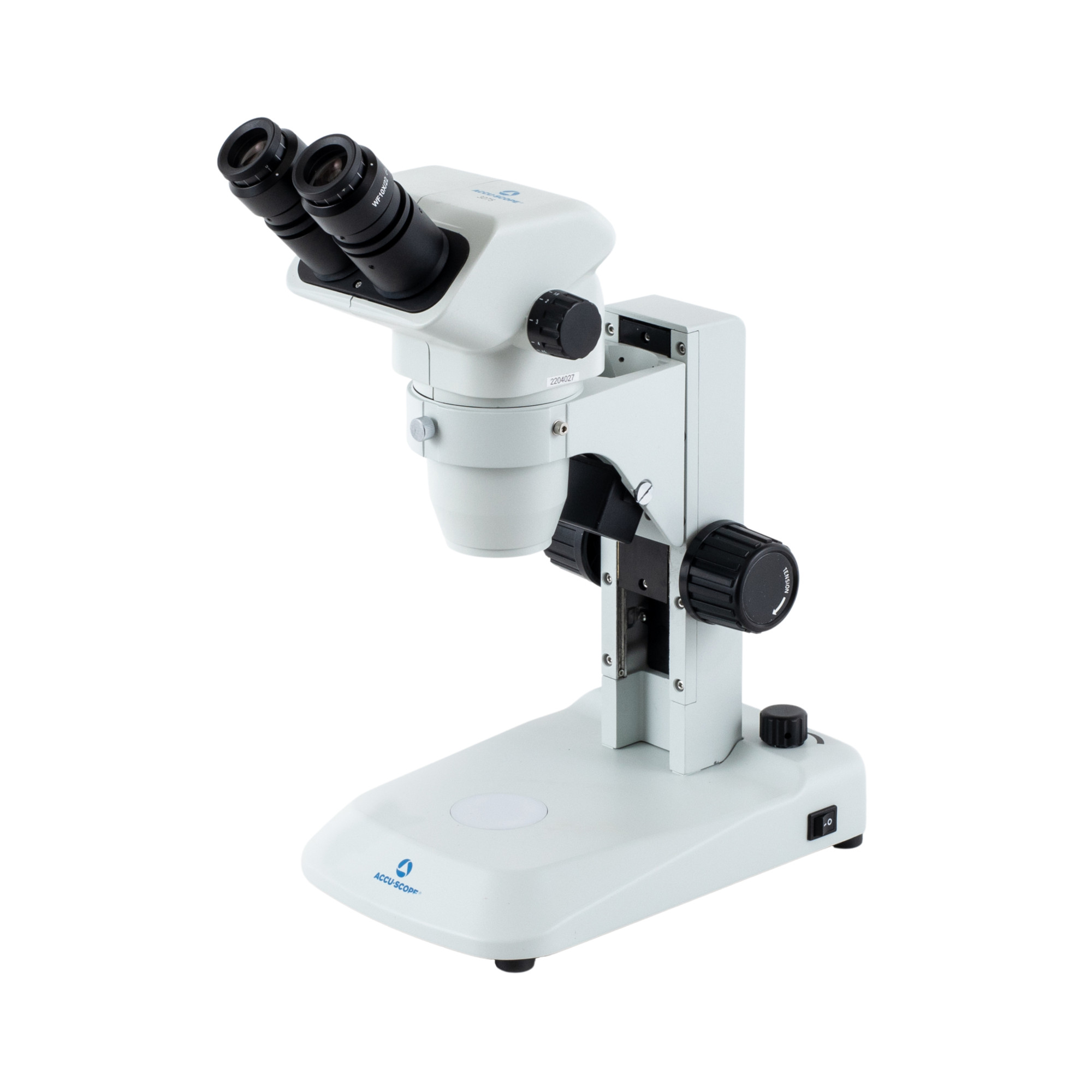
3075

The ACCU-SCOPE 3075 Series Zoom Stereo Microscopes are easy to use. Featuring a 0.67x – 4.5x zoom range, the 3075 Series delivers sharp, high...
Learn More

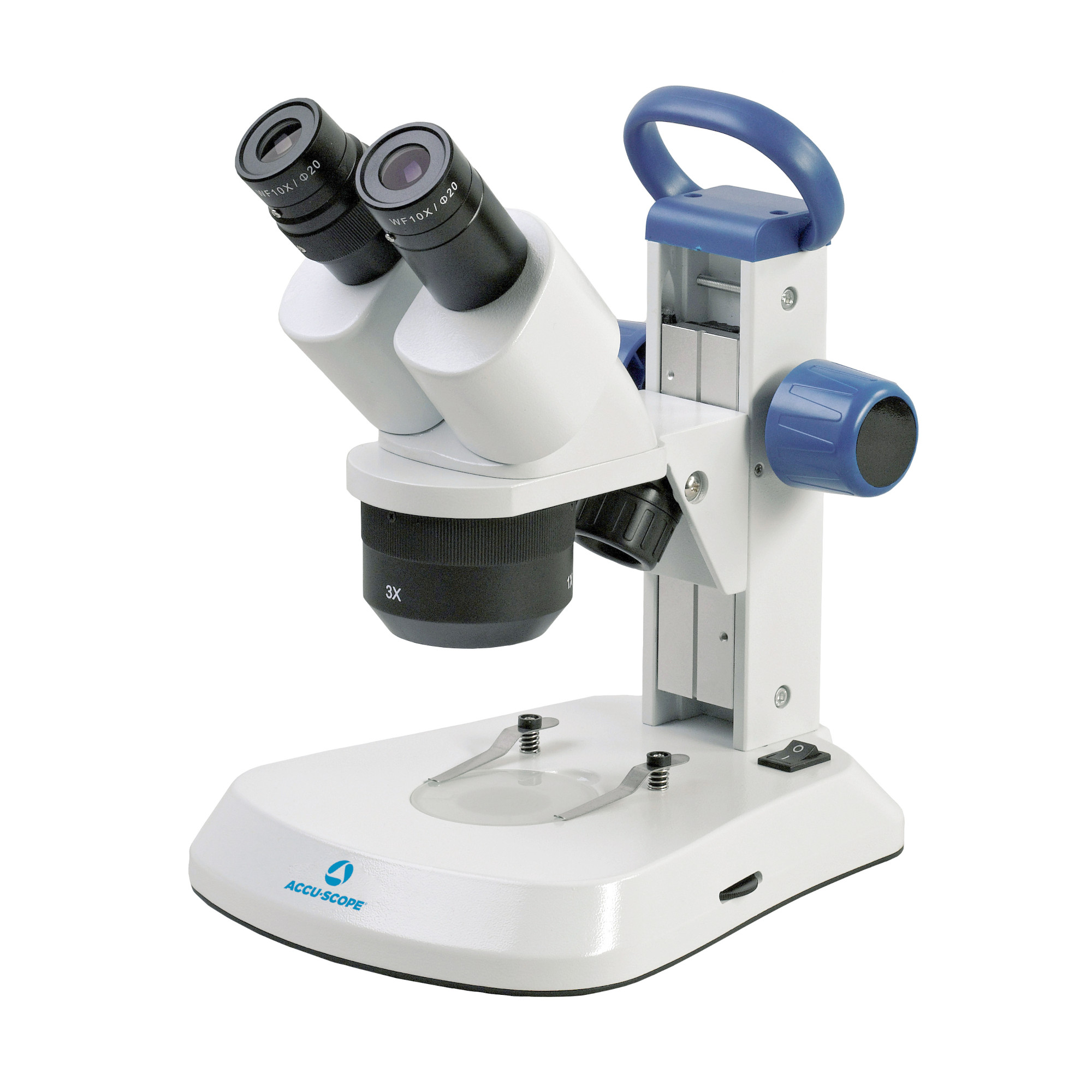
EXS-210

An economical stereo microscope with superior optical performance, the EXS-210 Stereo Microscope Series is a student-proof microscope offering...
Learn More

What to Consider When Choosing a Stereo Microscope

A stereo microscope should be selected around the specimen and the way it will be handled. Magnification is only one part of the decision. Working distance, stand design, illumination, viewing comfort, and digital imaging needs can have just as much effect on day-to-day use.

Application and Specimen Requirements

Start by defining the work the stereo microscope must support. A stereo microscope used for biological specimens may need different stand and illumination options than a stereo microscope used for assembly or inspection. Specimen size and shape influence working distance, field of view, and stand clearance. If users frequently manipulate samples, a stereo microscope should leave enough room for tools and hand movement. For tasks centered on thin slides and higher magnification, a compound microscope may be more appropriate than a stereo microscope. Consider how often the specimen changes, how much detail must be resolved, and if images need to be captured or shared. These practical requirements can narrow the stereo microscope options before comparing model-specific features.

Read more

Magnification and Field of View

Choose a magnification range that matches the size of the specimen and the level of detail the task requires. Lower magnification generally provides a wider field of view, which helps users locate features and follow larger areas of a sample. Higher magnification narrows that view and is better suited to examining smaller details. A zoom stereo microscope can be useful when the same workflow requires both broad inspection and closer observation, while fixed magnification can suit repeatable tasks performed at a known viewing level.

Read more

Working Distance and Stand Options

Working distance is the space between the microscope optics and the specimen when the image is in focus. More working room can make it easier to position forceps, probes, assembly tools, or specimen containers beneath the microscope. Stand selection also affects access. A compact stand may suit routine bench work, while a stand with additional reach can accommodate larger specimens or work areas. The specimen size, available bench space, and amount of hand movement should guide the choice.

Read more

Illumination Options

Lighting should match the material being viewed. Reflected illumination directs light onto the surface and is useful for opaque specimens, components, and other samples that cannot transmit light. Transmitted illumination passes light through a specimen and can support viewing of translucent materials. Ring illumination can provide broad, even light around the viewing area for some inspection tasks, or directed light to enhance details in the sample. Stereo microscope users should compare available lighting options with the surface, shape, and transparency of the samples they expect to examine most often.

Read more

Ergonomics and Digital Imaging

Viewing-head position, eyepiece adjustment, focus controls, and stand height can affect comfort during longer sessions. The setup should allow the user to maintain a practical viewing position while still reaching the specimen and controls easily. If documentation, training, or image sharing is part of the workflow, consider a trinocular configuration and compatible digital imaging options. Planning for a camera at the time of microscope selection can also make it easier – and much less expensive – to add imaging later.

Read more

Types of Stereo Microscopes 

Stereo microscopes are available in several configurations, and the best fit depends on the specimen, viewing task, and need for image capture. Fixed-magnification models provide set viewing levels for work that is performed repeatedly at the same scale. Zoom stereo microscopes let users move through a broader magnification range without changing the basic setup, which can be useful when a task shifts between locating a feature and examining finer detail. 

Viewing-head design is another important distinction. Binocular stereo microscopes are designed for direct visual observation through two eyepieces. Trinocular stereo microscopes add a separate imaging path that can support a compatible camera while keeping the eyepieces available for routine viewing. Because “stereo microscope” and “dissecting microscope” are commonly used for the same instrument type, a dissecting stereo microscope may use any of these configurations depending on the application.

Stereo Microscopes vs. Compound Microscopes

Stereo microscopes and compound microscopes are designed for different viewing tasks. A stereo microscope provides depth perception and more working space around the specimen, making it useful for larger samples, surface examination, manipulation, assembly, specimen preparation, and dissection. The user can observe the specimen while still having room to move tools or reposition the sample. 

A compound microscope is generally better suited to thin or small specimens that require higher magnification and less working room. Prepared slides, cells, and other fine structures are common examples. The right choice depends on the specimen and the detail that must be observed. If the task depends on three-dimensional viewing and hands-on manipulation, a stereo microscope is usually the more practical format. If the work centers on fine detail at higher magnification, a compound microscope may be the better fit.

Frequently Asked Questions About Stereo Microscopes

What Is a Stereo (Dissecting) Microscope Used For?

A stereo microscope is used to view and manipulate larger specimens at low-to-moderate magnification. Common applications include biological dissection, specimen preparation, assembly, inspection, and examination of surface features. Its depth perception and working distance leave room for tools and sample handling.

The terms are often used interchangeably. Stereo microscope describes the instrument’s use of two optical paths to create a stereoscopic view, while dissecting microscope reflects one of its familiar applications. Both terms commonly refer to microscopes designed for three-dimensional viewing of larger specimens and objects. 

A camera can be added to compatible stereo microscope configurations. Trinocular models provide a dedicated imaging path that can support a camera while leaving the eyepieces available for visual observation. Camera fit depends on the microscope, adapter, camera interface, and intended imaging workflow, so compatibility should be reviewed before selecting a system.

Fixed magnification can work well when a task is repeated at the same viewing level. Zoom systems provide more flexibility when specimen sizes vary or when users need to move between a broad overview and closer inspection. The best choice depends on how often magnification must change during the workflow.